



Meta Description: A lab diamond wedding band should suit your engagement ring and daily routine. Compare settings, stone sizes, metals and UK hallmarking before ordering.
A wedding band can look beautiful in a jewellery display yet sit awkwardly beside an engagement ring. The difference often comes down to a few millimetres: the height of the diamond setting, the width of the band and the space between the two rings.
These details deserve attention before choosing a lab diamond wedding band. Diamond size and sparkle matter, but so do comfort, stone security and the way the ring will look after years of daily wear. Understanding the relationship between design and practicality makes it easier to choose a ring that looks attractive without creating avoidable maintenance problems.
Why Lab-Created Diamonds Suit Wedding Bands
Laboratory-grown diamonds have essentially the same chemical composition, crystal structure and optical properties as natural diamonds. The main difference is their origin. Natural diamonds form underground, while laboratory-created stones are produced using controlled processes such as High Pressure High Temperature (HPHT) or Chemical Vapour Deposition (CVD). For wedding bands, this means lab-created stones provide the familiar appearance and hardness of diamonds without requiring naturally mined stones.
Their pricing can also make diamond-set designs accessible at a different budget level. Buyers may be able to consider greater diamond coverage or larger stones while keeping the overall cost within their planned spending. Still, diamond origin does not determine the quality of the finished ring. The cutting, setting, metalwork and overall construction deserve equal attention.
Check the Fit Against Your Engagement Ring
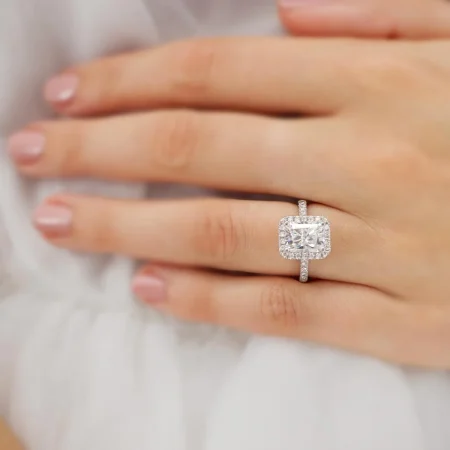
The engagement ring’s setting often determines which wedding band will sit comfortably beside it. A high-set solitaire generally leaves enough room for a straight band. Lower settings, large centre stones and certain halo designs can prevent two rings from sitting flush. A curved or contoured wedding band may solve the problem by following the outline of the engagement ring.
Before ordering, examine three details:
- Setting height: Check whether the engagement ring’s diamond basket or lower structure obstructs the wedding band.
- Band width: A wider wedding ring may create a heavier appearance beside a narrow engagement ring.
- Contact points: Diamonds or metal edges rubbing against exposed prongs can contribute to wear over time.
A small visible gap between two rings is not necessarily a design flaw. Sometimes leaving that space is preferable to forcing the rings together.
Half-Eternity or Full-Eternity: The Practical Difference
Diamond coverage changes the appearance, maintenance requirements and future flexibility of a wedding band.
A half-eternity ring places diamonds across part of the circumference, usually concentrating them on the visible upper section. A full-eternity design continues the stones around the entire ring. Half-eternity bands can offer greater flexibility for resizing, depending on the setting and construction. They also leave a plain metal section against the palm, which some wearers prefer.
Full-eternity rings provide uninterrupted diamond coverage, but resizing can be difficult or impractical. The diamonds underneath the finger may also receive more contact with hard surfaces. For someone who regularly works with their hands, a half-eternity design with well-protected stones may be the more practical option.
Diamond Size Should Match the Band’s Proportions
Carat weight measures diamond mass, not how much surface area the stones cover. A lab diamond wedding band containing several small diamonds can have the same total carat weight as another ring with fewer, larger stones. Their appearance will be quite different. Smaller stones often create a delicate line of sparkle. Larger stones produce a stronger visual pattern but usually require more substantial settings.
The cutting quality also affects brightness. Poorly proportioned diamonds may appear less lively, regardless of their origin. When comparing designs, ask for the individual stone measurements, diamond count and total carat weight. These details provide a clearer comparison than carat weight alone.
Settings That Balance Sparkle and Security
The method used to secure each diamond influences the ring’s appearance and everyday practicality. Pavé settings use small metal beads or prongs to secure closely arranged diamonds. They create a fine, continuous sparkle, although delicate settings require careful inspection.
Channel settings position diamonds between two metal walls. The surrounding metal can protect the edges of the stones, but repairs may be complex. Bezel settings surround individual diamonds with metal. They offer additional edge protection and a smooth appearance, although the surrounding metal changes how much of each diamond remains visible.
Shared-prong designs expose more of the stones but rely on fewer prongs between neighbouring diamonds. Regular checks are particularly useful for detecting loosened settings. No design removes the possibility of damage. Diamond hardness protects against scratching, but impacts can still chip stones or damage the surrounding metal.
Choosing a Metal for Everyday Wear
Platinum and gold are established choices for bridal jewellery, but their appearance and maintenance needs differ.
Platinum has a naturally white colour and develops surface marks and a patina with wear. White gold achieves its appearance through alloying and may have rhodium plating that requires renewal over time. Yellow and rose gold offer warmer tones, which can create an appealing contrast with colourless or near-colourless diamonds.
Matching the engagement ring’s metal is a useful starting point. It is also sensible to discuss differences in hardness and surface wear if two rings made from different alloys will rub together daily. Band thickness deserves attention, too. Very thin designs can offer a delicate appearance, but they leave less metal available around the diamond settings.
Certification and Stone Details Worth Checking
Diamond grading documents are useful, but their scope should be understood. The International Gemological Institute (IGI), for example, provides laboratory-grown diamond reports that identify stone origin and document applicable characteristics, including cut, colour, clarity and carat weight. Its jewellery reports may also assess mounted stones where the setting allows.
Small accent diamonds in wedding bands are not necessarily accompanied by individual grading reports. Ask the jeweller to provide written details of the diamond quality range, total carat weight, metal purity and any available independent documentation.
Before Ordering a Wedding Band in the UK
British ring sizes commonly use letters, so accurate sizing matters, particularly for diamond-heavy bands that may be difficult to alter. Try the proposed width alongside your engagement ring if possible. Two rings worn together can feel different from one ring worn alone.
UK hallmarking requirements also provide a useful safeguard. Gold jewellery weighing at least 1 gram and platinum jewellery weighing at least 0.5 gram generally require a legally recognised hallmark when sold as those metals, subject to applicable exemptions.
A retailer such as Novita Diamonds can be a reference point when comparing lab grown diamonds. Request setting dimensions, stone specifications and metal details rather than relying on product photographs alone.
Before confirming an order, establish the resizing policy, manufacturing timescale, return conditions and availability of future repairs. Personalised or made-to-order designs may have different cancellation arrangements. Finally, ask whether the jeweller offers stone-security inspections and whether the ring can be cleaned safely at home.